Welcome to the SmartHubs project's Open Data Platform!
The SmartHubs project examines mobility hubs, dedicated on-street locations where citizens can choose from different shared and sustainable mobility options.
learn more...
On this platform you are able to view, edit and compare mobility hub learning examples. Integration levels, developed by the SmartHubs project team, allow standardized benchmarking and the planning of development goals for hubs. For more information on the integration levels see here: Overview on integration levels
Have a look on all hubs in table view or see which hubs are organized in an hub network on the seperate sub-pages: Hubs, Networks. For research and innovation projects with dedicated case study hubs have a look on this sub-page.
in the database: 158 Hubs (9 of which are Case Studies in the SmartHubs Project), 26 Mobility Hub Networks
Mobility Hubs
Filter
Physical Integration Level: 0 ·
1 ·
2 Digital Integration Level: 0 × Democratic Integration Level: 0 ·
1 ·
2 ·
4
Barcelona, Spain
Central Station with public transportation and other different modes
urban-small
Madrid, Spain
Central Station with public transportation and other different modes
urban-large
Ettelbrück, Luxembourg
Multimodal station in the city of Ettelbrück (7.500 inhabitants) in the Grand Duchy of Luxembourg. Mobility services present here are train, bus and car sharing (FLEX).
urban-small
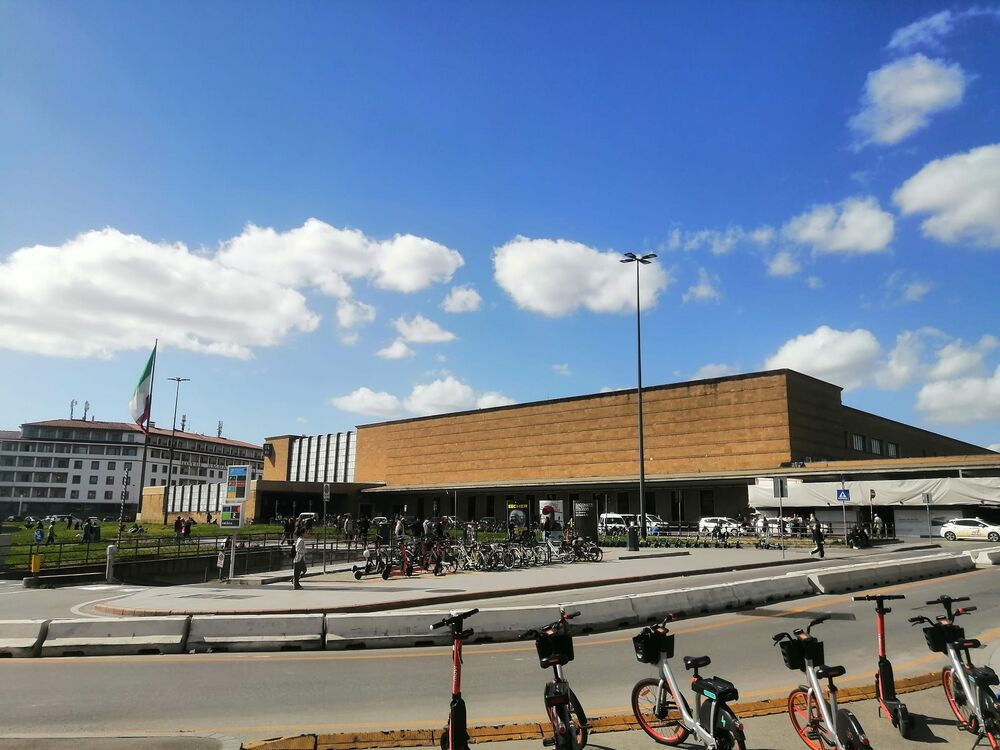
Firenze, Italy
Central Station with public transportation and other different modes
central-urban
Clermont-Ferrand, France
Reorganization of the different transport modes in the station
Improvement of pedestrian areas and the public space. Some of the roads on the adjacent streets are reserved for buses transit only.
urban-large
Lille, France
One of the two mobility hubs of the "Euraflandres" interchange project.
Major station becoming part of an interchange project of two mobility hubs
Color coded information.
Ticketing information "Pass Pass"
national
Lille, France
One of the two mobility hubs of the "Euraflandres" interchange project.
Major train station becoming part of an interchange project of two mobility hubs.
How to adapt existing major train station to become proper mobility hubs.
User convenient and integrated real-time information: details on schedule and departure are also provided in surrounding services: metro station, restaurants, coffee shops.
The design planning included the improvement of streets, green spaces and addition of pavements textures.
Examples of integrated tickets ("Pass Pass") and convenient purchasing ways in retails at the hub.
central-urban
Gothenburg, Sweden
Central Station with public transportation and other different modes available using UbiGo
central-urban
The Hague, Netherlands
Public Transport stop next to large market in a challenging neighborhood
Reconstruction of PT stop and urban redesign of the area with the goal to create societal support. Moving from transit stop to mobility hub fitting needs of vulnerable-to-exclusion groups living in the area
urban-large planned
Haarlem, Netherlands
This is an urban neighbourhood hub under development in an area that is under development in Haarlem. Haarlem houses 162.000 residents.
urban-small planned
Brakel, Belgium
Mobility hub in the village of Brakel offering bus connections and car sharing, as well as bike facilities. It is situated at the border of the town, next to a ring road, and can be considered as one of the (currently) few mobility hubs that has been fully developped in Flanders and offers car sharing as well.
Source:
https://hoppin.be/nl/vind-hoppinpunten/1079/rural
Gavere, Belgium
Mobility hub in the village of Gavere, a rural region south of Ghent. It is one of the few mobility hub in the rural parts of Flanders that offers both car and bike sharing. It is conveniently located in the heart of the village.
Source:
https://hoppin.be/nl/vind-hoppinpunten/2098/rural
Leuven, Belgium
Hoppin Heverlee Station is the first of 50 mobility points in the Belgium town of Leuven. All mobility points in Flanders are branded 'Hoppin'. Small railway stop right before the city of Leuven. Has excellent bus connections, bikesharing, cargo-bikesharing and carsharing facilities right in front of the station. Has a digital information pillar bundling information on all departures and available services at this hub.
Source:
https://hoppin.be/nl/vind-hoppinpunten/1758/urban-fringe
Leuven, Belgium
This mobility hub is situated in Kessel-Lo, a suburb of the city of Leuven. It is an interesting learning case because it has been designed by the residents in a bottom-up fashion via the platform 'Maak het mee platform', through wich the inhabitants could provide suggestions regarding the development of this hub. (
https://participatie.leuven.be/nl-BE/).
Source:
https://hoppin.be/nl/vind-hoppinpunten/1717/urban-large
Leuven, Belgium
This mobility hub is situated in Kessel-Lo, a suburb of the city of Leuven. It is an interesting learning case because it has been designed by the residents in a bottom-up fashion via the platform 'Maak het mee platform', through wich the inhabitants could provide suggestions regarding the development of this hub. (
https://participatie.leuven.be/nl-BE/).
Source:
https://hoppin.be/nl/vind-hoppinpunten/1725/urban-small
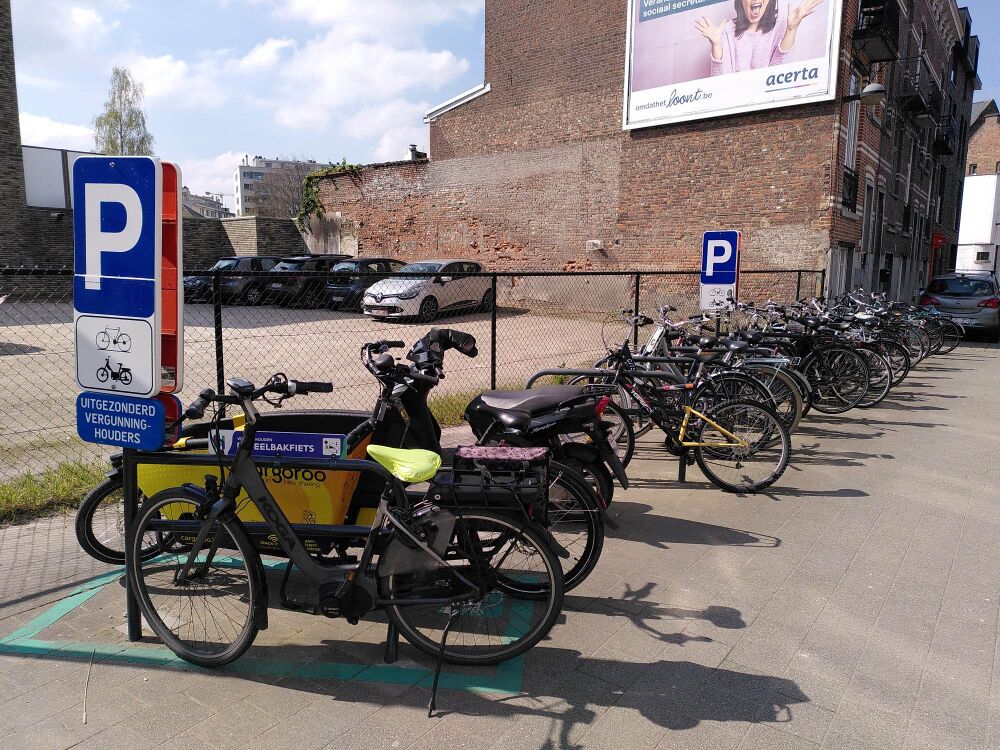
Leuven, Belgium
urban-small
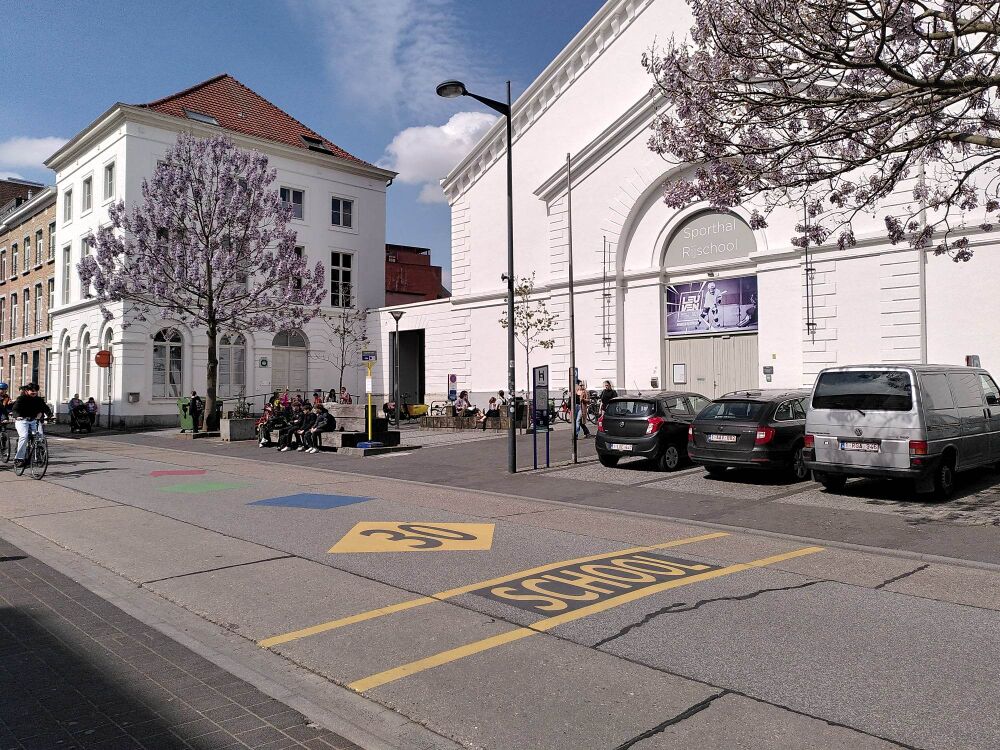
Leuven, Belgium
Mobility hub at the library and sporting center in Leuven. Next to cargo bike sharing and taxi's, it is possible to rent prams in the building next to this hub. At this location, a self-service bike repair station is available.
Source:
https://hoppin.be/nl/vind-hoppinpunten/1724/urban-small
Leuven, Belgium
Mobility hub in a suburb of Leuven, outside the city center. Located at bus stop, with cargo bike sharing, car sharing and parcel lockers. The location has been designed in cooperation with the neighbourhood and was on the city's wishlist for developing a mobility hub. A participation moment was organised.
Source:
https://hoppin.be/nl/vind-hoppinpunten/1726/urban-small
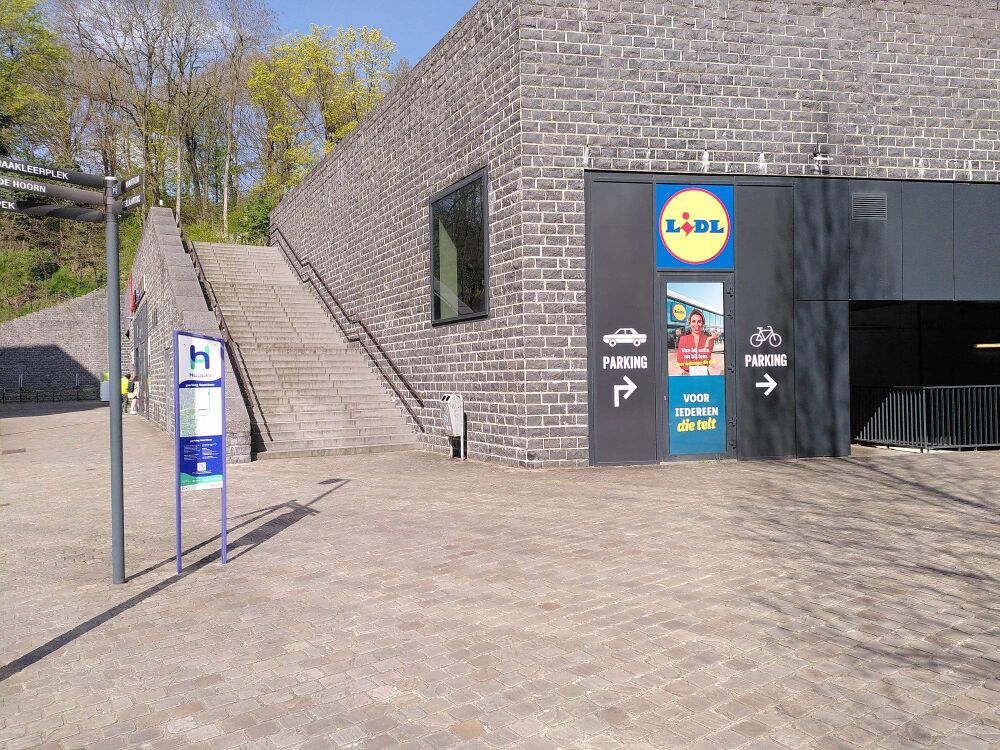
Leuven, Belgium
urban-small
