Welcome to the SmartHubs project's Open Data Platform!
The SmartHubs project examines mobility hubs, dedicated on-street locations where citizens can choose from different shared and sustainable mobility options.
learn more...
On this platform you are able to view, edit and compare mobility hub learning examples. Integration levels, developed by the SmartHubs project team, allow standardized benchmarking and the planning of development goals for hubs. For more information on the integration levels see here: Overview on integration levels
Have a look on all hubs in table view or see which hubs are organized in an hub network on the seperate sub-pages: Hubs, Networks. For research and innovation projects with dedicated case study hubs have a look on this sub-page.
in the database: 158 Hubs (9 of which are Case Studies in the SmartHubs Project), 26 Mobility Hub Networks
Mobility Hubs
Filter
Smartness: Single Mobility Services × Physical Integration Level: 1 × Digital Integration Level: 0 ·
1 ·
2 Democratic Integration Level: 0 ·
1
Munich, Germany
Carsharing Freefloating 3 parking spaces
Car sharing stationary 3 parking spaces
Electric charging infrastructure 2 charging ports (AC)
Info desk yes
Bicycles MVG Rad
Electric bicycles MVG eRad
Privileged parking for e-vehicles 4 parking spaces
urban-small
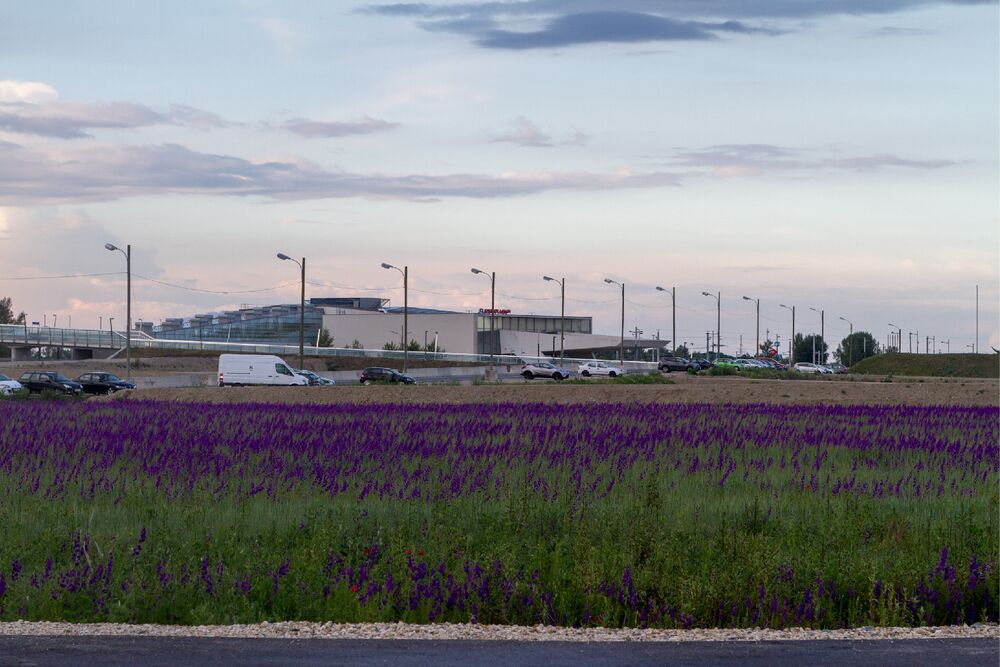
Vienna, Austria
public transport node on the northern edge of Seestadt Vienna
urban-small planned
Baden bei Wien, Austria
The Baden bei Wien railway station (Bahnhof Baden bei Wien) has various mobility offers including access to public transportation: interregional, freight and local trains (e.g. S-Bahn, WLB; ÖBB), and local and regional buses. It also includes carsharing (Bea), ÖBB bicycle sharing and rental, car and bicycle parking, taxi services and an e-charging station. Bike Sharing is located at the train station and on further stations in the city center.
central-urban
Budapest, Hungary
Central Train Station
central-urban
Calderwood, United Kingdom
urban-small
Madrid, Spain
This hub encompasses the integration of all mobility and last-mile distribution services in the capital. It will provide Madrilenians with the possibility to access the city centre in private or shared electric vehicles to pick up parcels, among other services. This EV charging station has a total of 12 charging points and an installed capacity of 2.5 MW. Four of these points are state-of-the-art ultra-fast chargers with a maximum power of 400 kW. The remaining points include four of 200 kW and four of 50 kW. This is the current standard of optimal loading for most commercial models and which have a special length compatible with logistics vans.
Users will be able to easily charge their EVs through the Electro-EMT application, designed by the EMT for the entire recharging network.
Recharge prices are the following:
0.69 cents per kW/hour for the 400 kW chargers;
0.49 cents kW/hour for the 200 kW chargers;
0.40 cents kW/hour for the 50 kW chargers.
In addition to electric recharging, Canalejas 360 offers electromobility and micro logistics services from companies that will carry out their operations within its facilities. The hub is located next to the pedestrianised Puerta del Sol in the section between Calle Alcalá, Sevilla and Plaza de Canalejas. It occupies the -1 floor, under Sevilla Street and adjacent to the Canalejas complex, and it is a space of about 5,500 m² of the surface
urban-large
Ljubljana, Slovenia
central-urban
Mantova, Italy
intermodal hub in the center of the city
urban-small
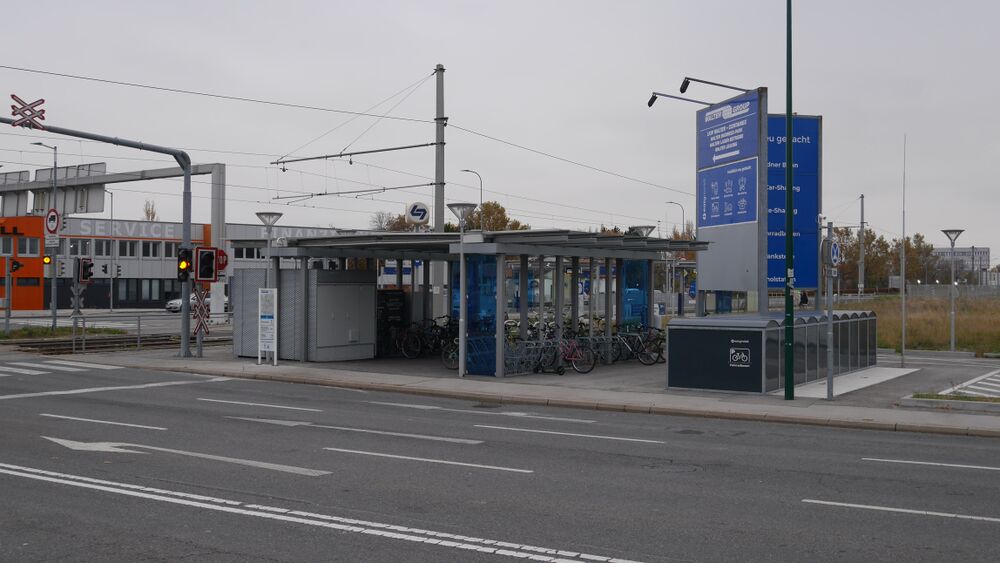
Wiener Neudorf, Austria
Award-winning hub in Lower Austria with a tram connection to Vienna
urban-small
Clermont-Ferrand, France
Reorganization of the different transport modes in the station
Improvement of pedestrian areas and the public space. Some of the roads on the adjacent streets are reserved for buses transit only.
urban-large
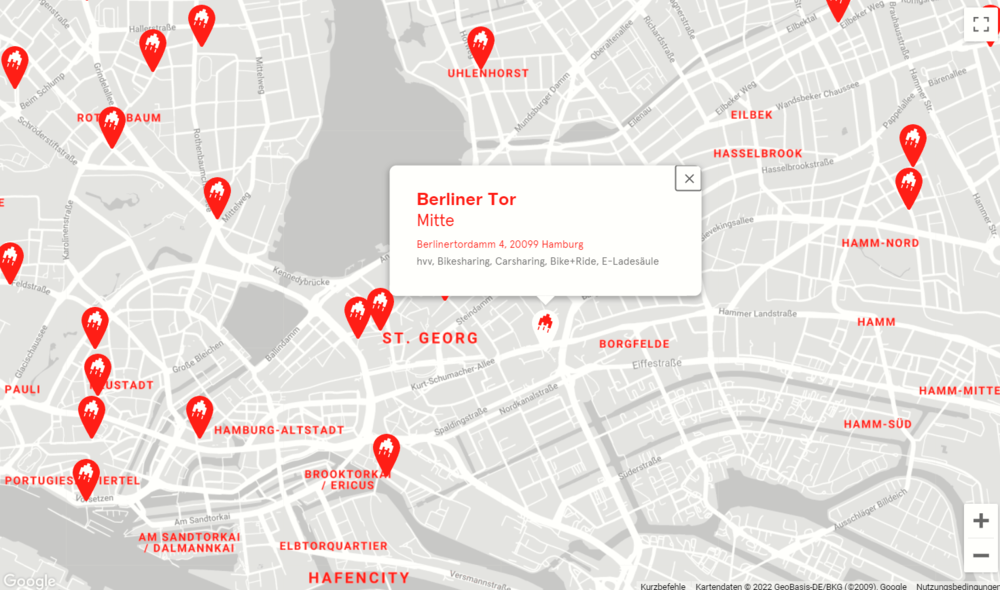
Hamburg, Germany
Station Berliner Tor is a mobility hub in the inner city of Hamburg, Germany. It is one of 18 mobility hubs that were created (or added to previously existing stations) by hvv switch. Berliner Tor is also a transport nodal point.
Carsharing, Bikesharing, Bike+Ride and hvv switch partners (SHARE NOW, SIXT share, MILES and cambio) can be used. An electrical charging point is also available. The vehicles from these companies can be parked and taken from the hvv switch stations.
Special about the station Berliner Tor is:
- availability of multiple transportation modes apart from the hvv switch modes: tube, tram, bus
- and an additional bike rental station (StadtRAD Hamburg)
- multiple restaurant options, banks, green spaces (parks)
central-urban
Antwerpen, Belgium
urban-fringe
Gavere, Belgium
Mobility hub in the village of Gavere, a rural region south of Ghent. It is one of the few mobility hub in the rural parts of Flanders that offers both car and bike sharing. It is conveniently located in the heart of the village.
Source:
https://hoppin.be/nl/vind-hoppinpunten/2098/rural
Leuven, Belgium
Hoppin Heverlee Station is the first of 50 mobility points in the Belgium town of Leuven. All mobility points in Flanders are branded 'Hoppin'. Small railway stop right before the city of Leuven. Has excellent bus connections, bikesharing, cargo-bikesharing and carsharing facilities right in front of the station. Has a digital information pillar bundling information on all departures and available services at this hub.
Source:
https://hoppin.be/nl/vind-hoppinpunten/1758/urban-fringe
Leuven, Belgium
This mobility hub is situated in Kessel-Lo, a suburb of the city of Leuven. It is an interesting learning case because it has been designed by the residents in a bottom-up fashion via the platform 'Maak het mee platform', through wich the inhabitants could provide suggestions regarding the development of this hub. (
https://participatie.leuven.be/nl-BE/).
Source:
https://hoppin.be/nl/vind-hoppinpunten/1717/urban-large
Leuven, Belgium
This mobility hub is situated in Kessel-Lo, a suburb of the city of Leuven. It is an interesting learning case because it has been designed by the residents in a bottom-up fashion via the platform 'Maak het mee platform', through wich the inhabitants could provide suggestions regarding the development of this hub. (
https://participatie.leuven.be/nl-BE/).
Source:
https://hoppin.be/nl/vind-hoppinpunten/1725/urban-small
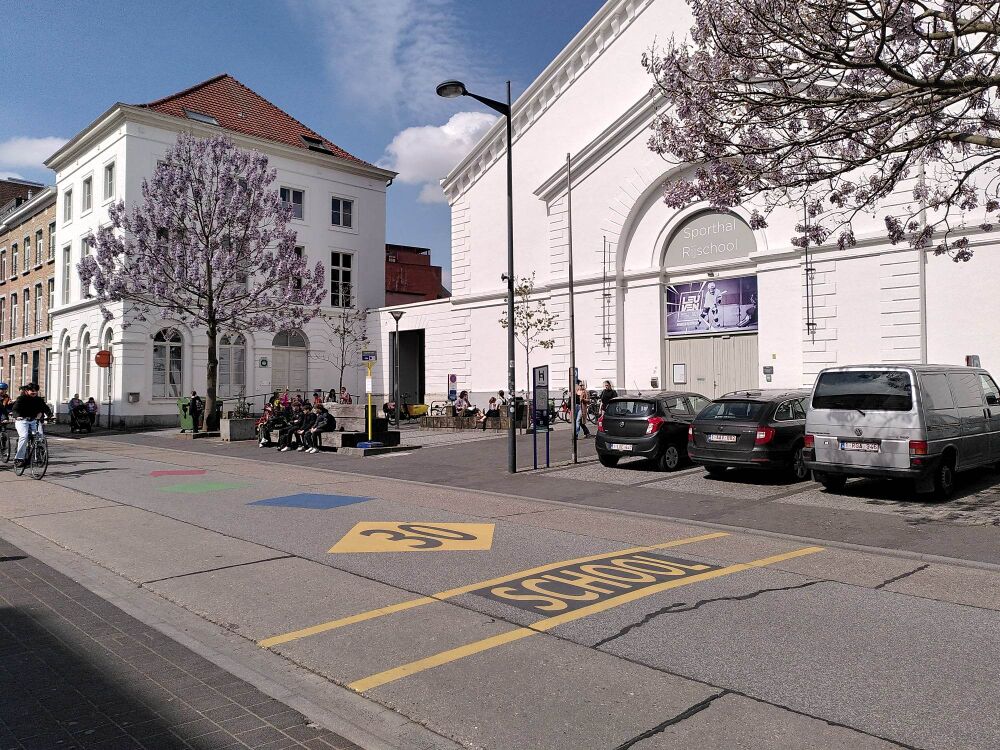
Leuven, Belgium
Mobility hub at the library and sporting center in Leuven. Next to cargo bike sharing and taxi's, it is possible to rent prams in the building next to this hub. At this location, a self-service bike repair station is available.
Source:
https://hoppin.be/nl/vind-hoppinpunten/1724/urban-small
Leuven, Belgium
Mobility hub in a suburb of Leuven, outside the city center. Located at bus stop, with cargo bike sharing, car sharing and parcel lockers. The location has been designed in cooperation with the neighbourhood and was on the city's wishlist for developing a mobility hub. A participation moment was organised.
Source:
https://hoppin.be/nl/vind-hoppinpunten/1726/urban-small
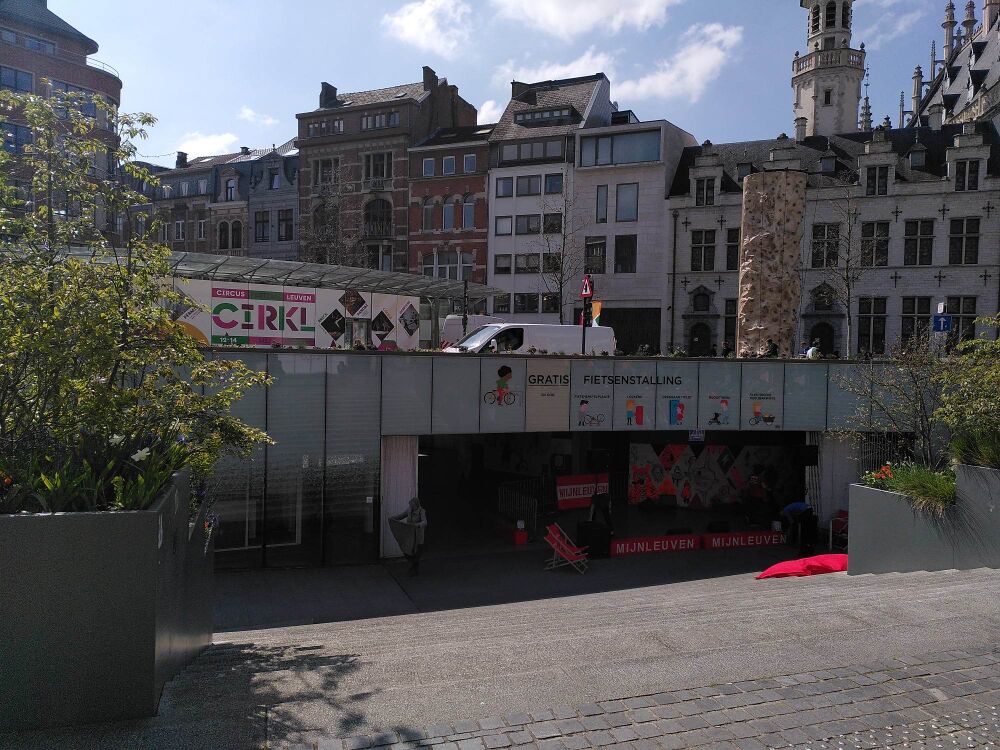
Leuven, Belgium
This mobility hub is located in the historic city center of Leuven, at an important bus stop. It also offers cargo bikes and a waiting place for taxi's. It offers additional services such as bike repair and parcell lockers. It is one of the few places in Belgium where you can rent a pram.
Note: there is E-charging for bikes at this hub.
Source:
https://hoppin.be/nl/vind-hoppinpunten/1750/urban-large
